
Professional Portfolio Creation

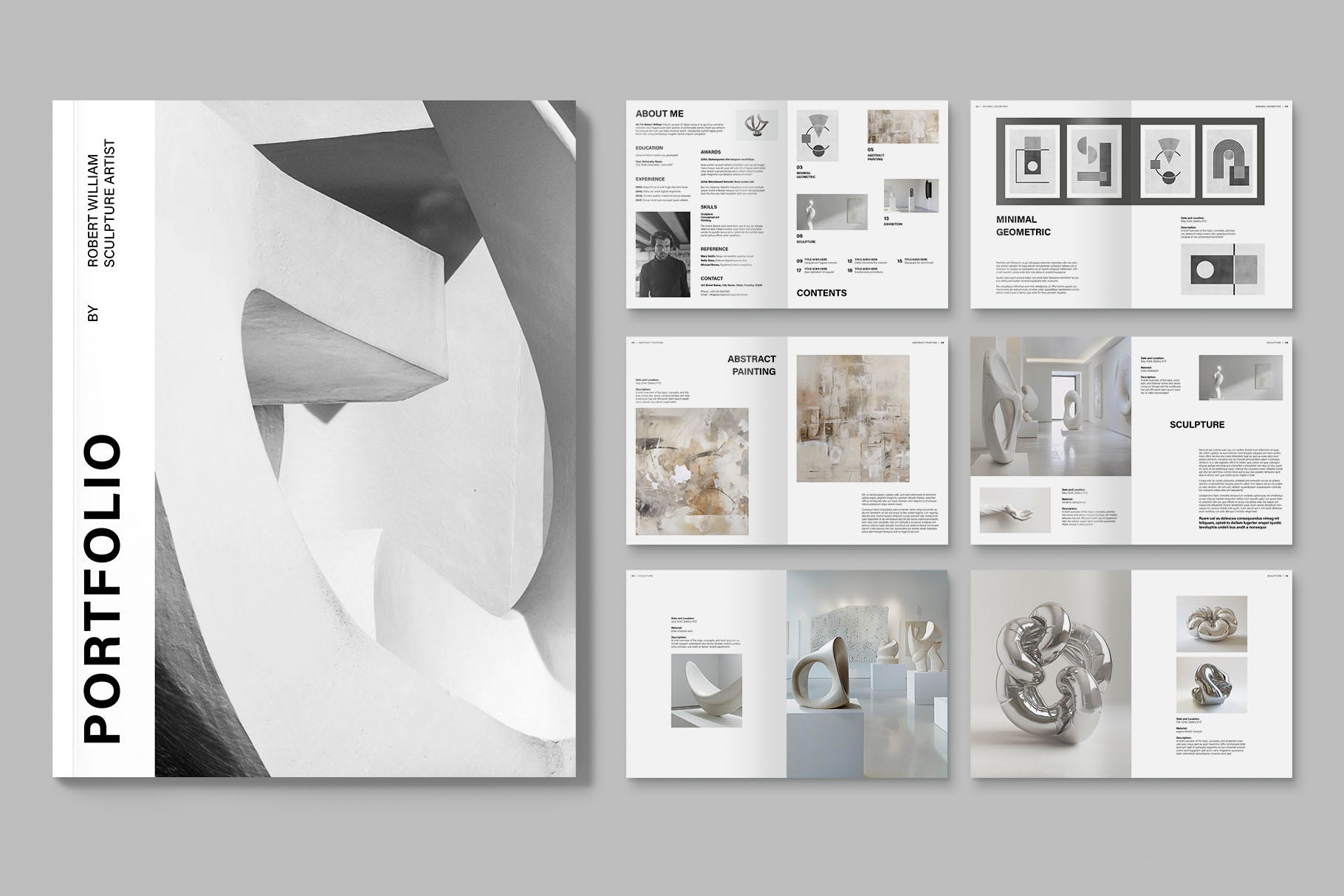
Imagine: it's Thursday evening, 6:47 pm. You've just returned from your studio, preparing dinner, when your phone rings. The screen shows an unknown number with a British code. Your heart starts beating faster when you hear: "Good evening, this is John from White Cube Gallery. Ms. Wimbush is visiting Vilnius and saw your work at an exhibition. She's very interested and wants to see your complete portfolio... by tomorrow morning. Then you might still manage to meet Friday afternoon."
If your portfolio is prepared and regularly updated - sending it takes just a few minutes. Ideally, add a link to your website, social media, CV, and artistic concept. This could be a springboard to an international career and global success. One email is enough to start a conversation about a personal exhibition in one of the world's most important art galleries.
But what if you didn't have a portfolio? If your latest works remained unphotographed, and your artist concept needed to be updated? One moment can forever eliminate potential glory. And believe me, in the art business; everything happens "here and now" - no one will wait for you, and after a few days, that impulsive interest will have vanished because there are millions of equally talented but more organized (means - ready to work professionally) artists around.
So, how do you prepare a portfolio - your best works' business card, one of the most essential marketing tools for achieving international recognition?
1. Selection of Best Works: Quality, Not Quantity
The first portfolio rule is simple and strict: less is more. Your portfolio should be a collection of best works, not a comprehensive archive (I wrote about how to prepare quality artwork descriptions and photographs in November's article).
Start by selecting 10-20 works that represent your style and are objectively your best. It's worth showing your evolution - you've had different creative periods or significant cycles. Try to evaluate with an outsider's view, detaching yourself from how much emotional or physical effort it costs to create one work or another. If you have trusted art critic friends or collectors - consult with them.
When selecting works, ask yourself:
- Does this work reflect my current artistic direction, or is it the best work from an older period?
- Would I confidently show this work to someone I respect professionally?
- Does the piece demonstrate technical mastery while revealing my unique vision?
- Has this work received positive feedback from colleagues or professionals?
Remember: including weaker works doesn't improve the stronger ones - it weakens them.
2. The Power of Thematic Organization
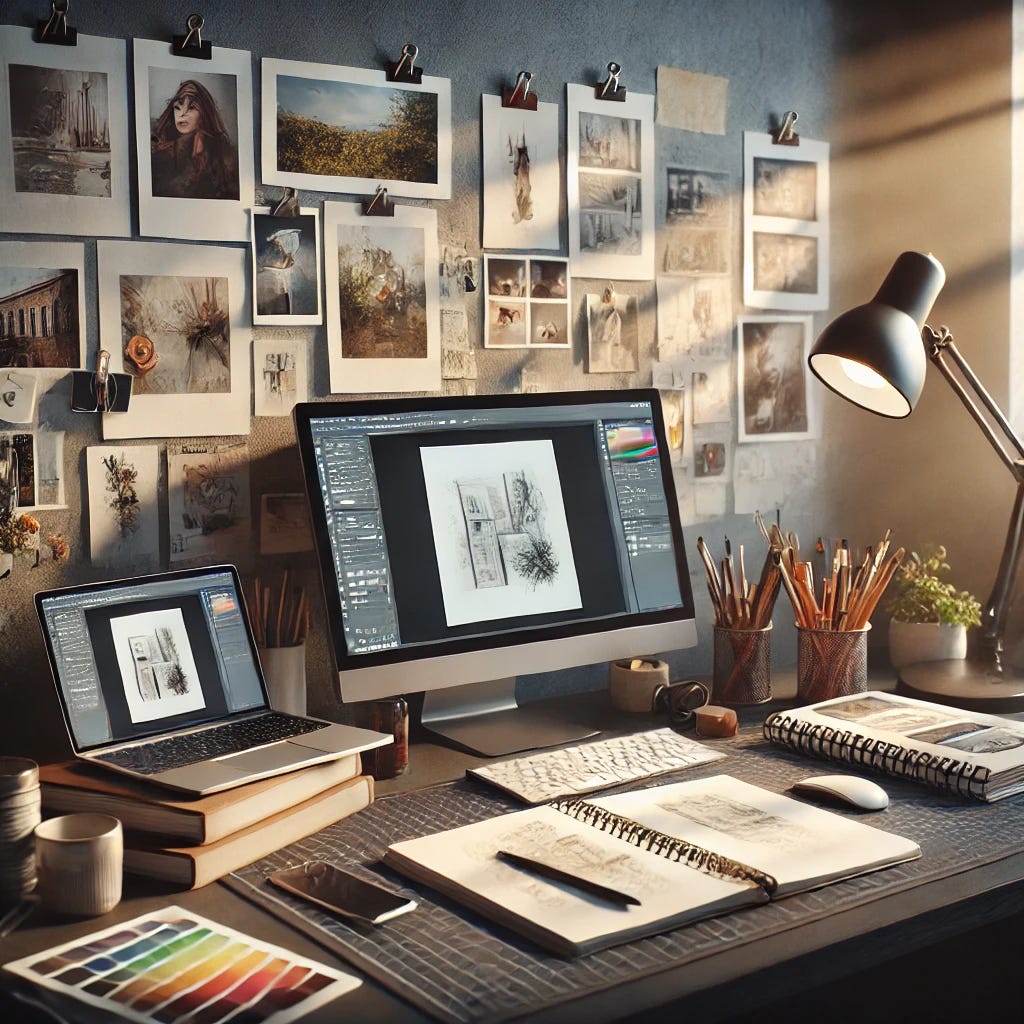
Think of your portfolio as a story, each series or theme being a chapter. Every artist is unique - only you will know whether it's most favorable to present works chronologically or better to group them by conceptual connections, technique, or visual elements. What's important is that your chosen method helps viewers understand your artistic journey and shows the ability to present concepts. Proper artwork details (dimensions, technique, year) are necessary in all cases.
For example:
- thematic sections (landscapes, portraits);
- techniques (painting, digital works);
- conceptual series (identity studies, environmental contemplations).
3. Descriptions
Your creative and/or series concept should be clear, concise, and authentic. Avoid exalted art jargon that hides rather than explains. A strong artist concept:
- begins with an engaging statement about your artistic vision;
- explains your creative process and influences;
- describes themes and questions that your works explore;
- connects your practice to broader contemporary art discussions.
If possible, limit yourself to 300 words. Write as if explaining your work to an interested friend, not defending a dissertation. It's recommended to write in the third person, as galleries or curators might use these descriptions for their website, project, or exhibition (they'll do "copy-paste"), and they'll have less editing.
Second, provide a brief CV: birth year and place (sometimes can spark the reader's curiosity), education, and essential exhibitions in chronological order (no need to mention all appearances on your journey to recognition - a personal exhibition in a library isn't crucial information) and significant awards. Again, it's suggested that you write in the third person. Pay attention to the Fact that your background, age, and gender can be understood directly or indirectly (unless you principally strategically don't want to mention something).
It may be worth including your photo. People are curious and feel more comfortable when they understand who "stands" behind the description.
4. Portfolio Formats
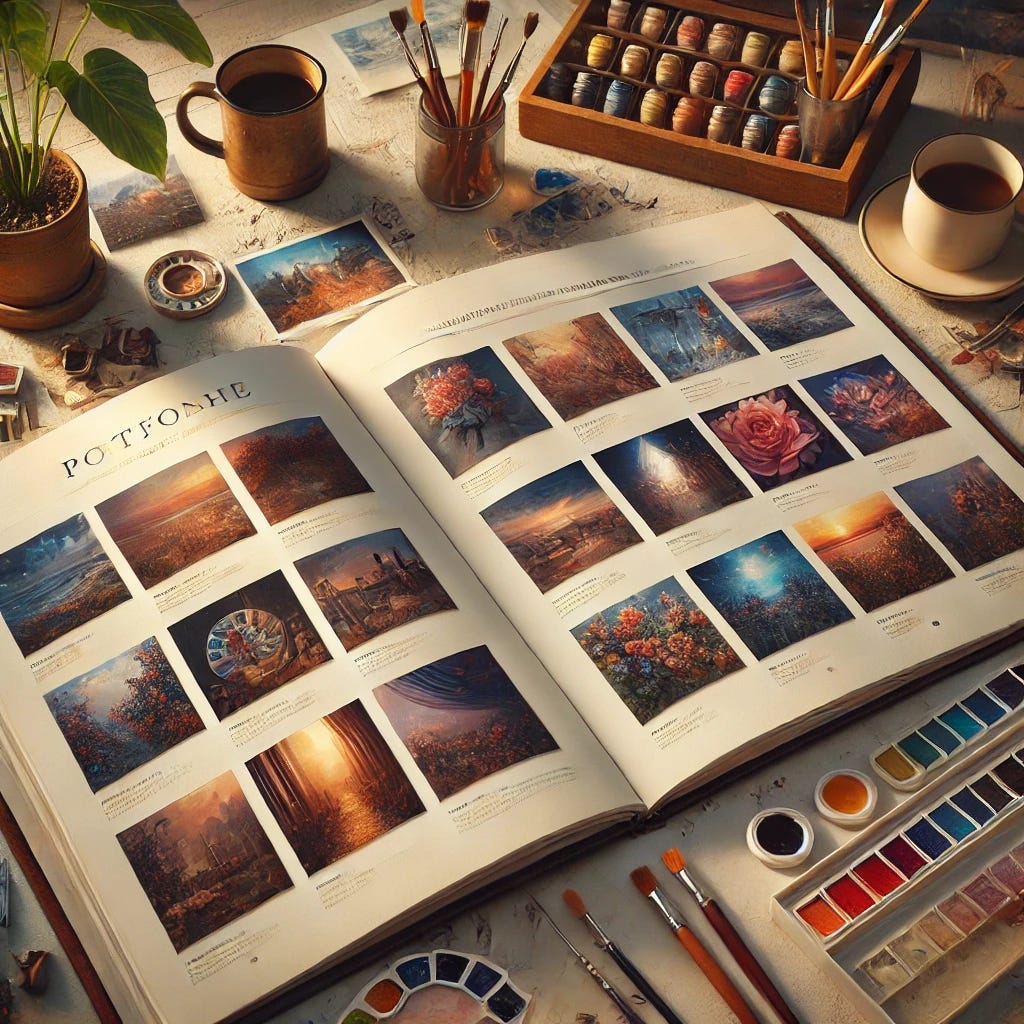
Ideally, you should have a physical portfolio, website, Instagram profile, and digital PDF version.
When preparing a portfolio, I suggest considering these aspects:
- design shouldn't compete with the artwork;
- high-resolution images with uniform formatting style are recommended (but protect them from downloading);
- downloadable artwork photos should be in a reduced format and possibly with your name and surname (or initials, logo) watermark - this protects against illegal use of artwork photos;
- clear and complete artwork details;
- easy navigation between works;
- mobile device optimization;
- convenient contact/inquiry system;
- quick loading (for your administrative convenience);
- option to download PDF version if everything is presented on the website;
- if the portfolio is printed - invest in quality printing and ensure accurate color reproduction (do tests before running full print). Don't write prices if your interested party is a gallerist or collector - indicate price categories in the email. A portfolio isn't a solid art album - keep in mind you'll be sharing it with interested parties from various countries, so it should be light and conveniently formatted - suitable for carry-on luggage. Consider a binder or postcard-style portfolio, allowing regular updates with new works and removing irrelevant ones.
If you can't afford a website - have an appropriately prepared PDF.
Usually, prices are separate from digital (or PDF) portfolios. Often asked whether it's appropriate to include works in your portfolio that you no longer have for sale (but consider them your masterpieces). The answer is yes because this is your creative business card, not a catalogue of works for sale.
However, I recommend having a parallel portfolio-alike version with prices and available works; a file can be sent to clients wanting to purchase works. In such a file, I'd suggest adding several illustrations of works hanging in space (from exhibitions or modelled in interiors) to better imagine the scale.
You need to accept that this document will require constant review and updating - your CV will expand, artwork prices will change, some will be sold, and newer and more worthy works will appear in the portfolio.
Keep an archive of your portfolios. This will allow you to observe your artistic improvement and will serve art historians in the future.
Name all files clearly - e.g., "name_surname_portfolio_2024." Understand that gallerists receive lots of documents, and they can easily get lost in the Downloads stream. Not making people put extra effort into organizing your files is always a big plus for you. There are plenty of talented artists - everyone wants to work with those who are also organized, efficient, and pleasant.
Final Thoughts
Remember that your portfolio is often the first chance to make an impression. Take time to make it exceptional. Gather feedback from trusted colleagues or mentors. Your portfolio should look professional and personal - a careful balance showing that you take your work seriously while highlighting what makes your artistic voice unique. Show your work, not your design skills. Most importantly, ensure it reflects who you are as an artist now, not who you were or who you think others want you to be.
Fun Fact - remember to put your name and contact information in a visible place. It's a very common mistake :)